

Modern dairy farms generate a large amount of information across many different systems, devices and timeframes. Milk production, herd health, environmental conditions, cow behaviour and operational activity may all be recorded separately, making it difficult to understand how one signal relates to another. The opportunity was to bring this information into a single intelligence platform that could identify patterns across the wider farm, rather than treating each dataset in isolation.
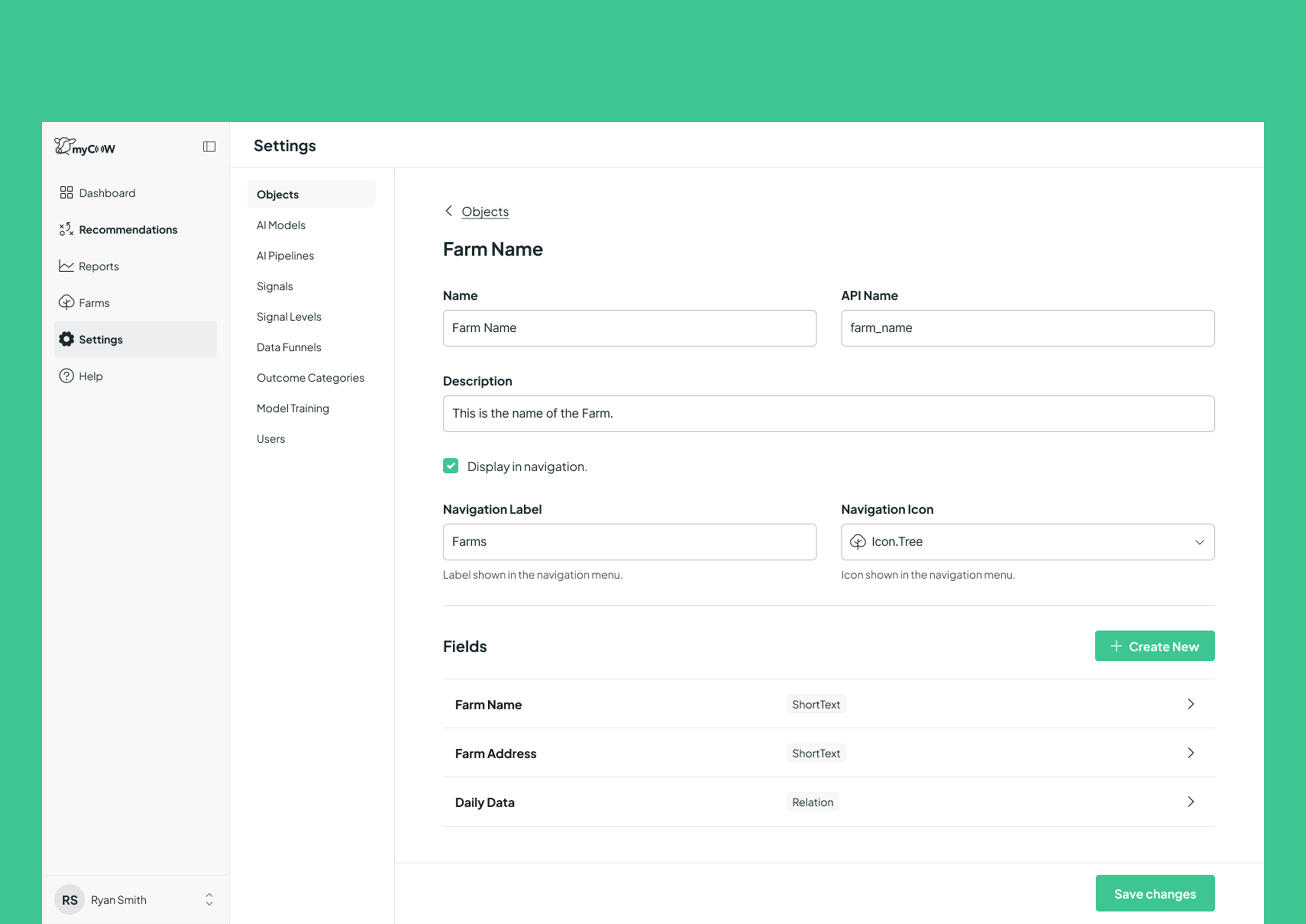
The complexity was not only in collecting the data, but in making it consistent enough to be useful across different AI models. We designed a unified but flexible data structure that could standardise information from farms, milk systems, sensors, cow collars and other connected sources while preserving the detail that made each dataset valuable. This created a stable foundation that could continue to evolve as new data sources and use cases were introduced.
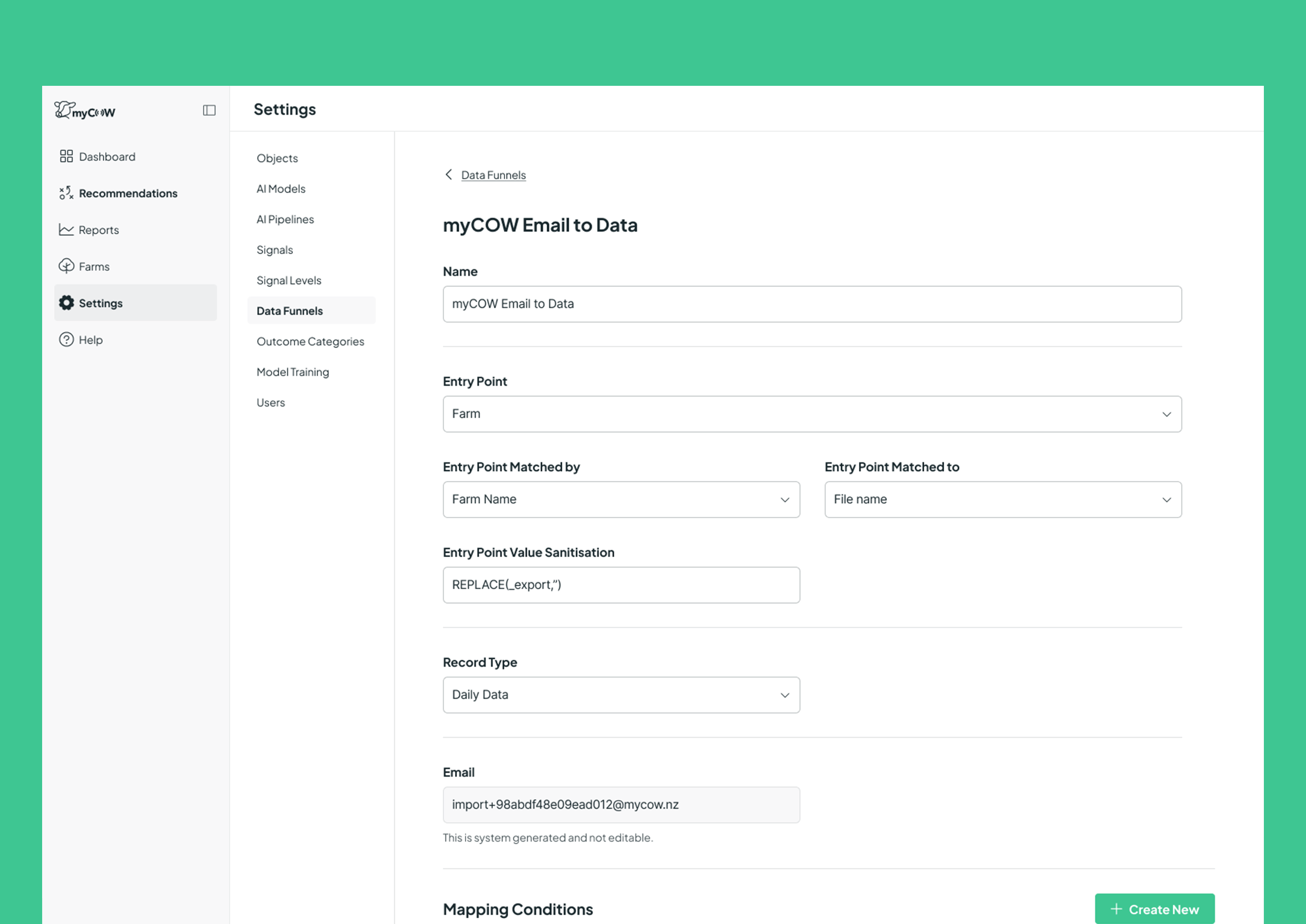
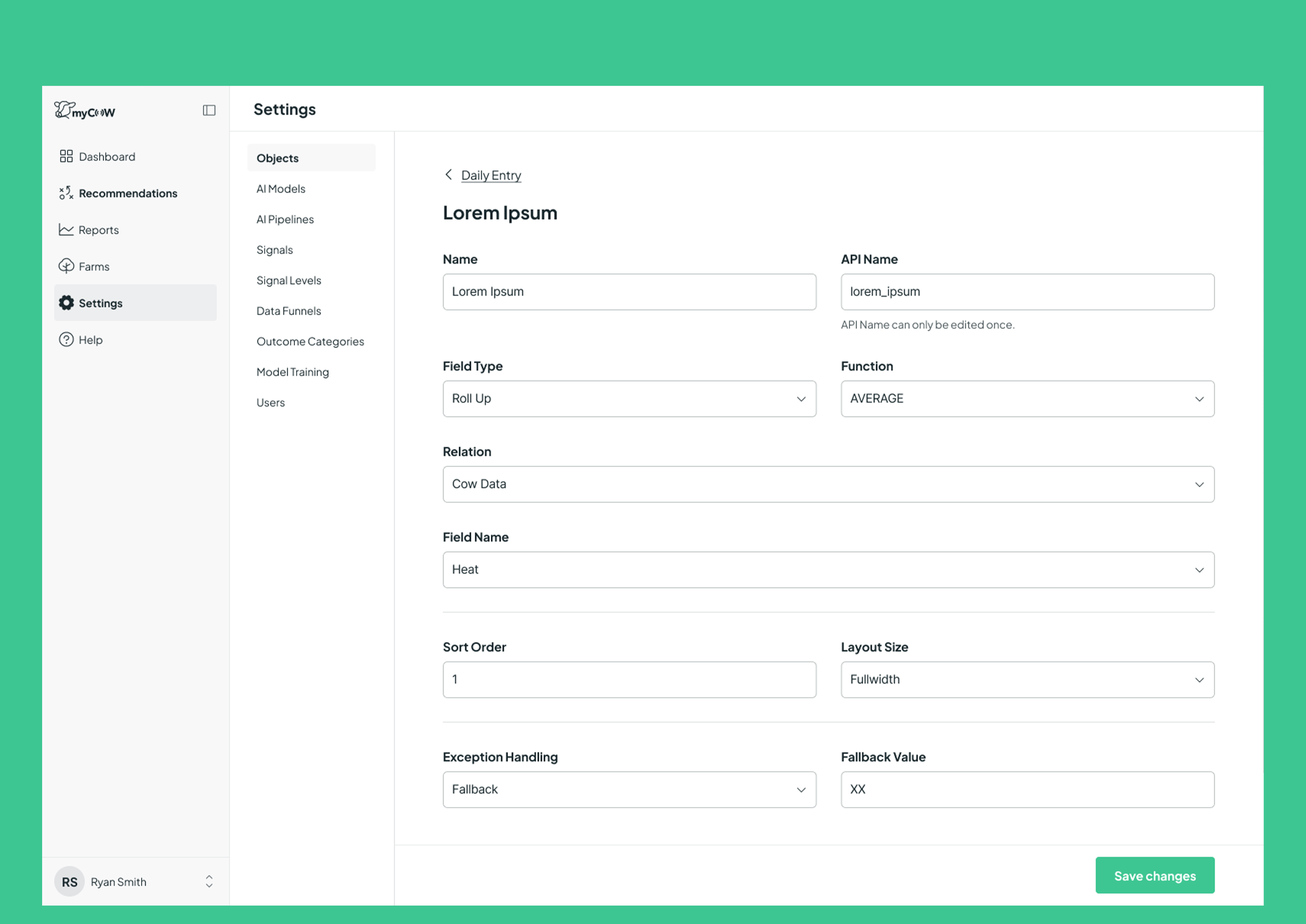
Different models require different combinations, structures and time ranges of data. A generative model answering a farm-level question need broad context across several datasets, while a time-series model focus on changes in a specific measure over time. The platform creates dynamic data funnels that select, prepare and route the right information into each model for training and inference, without relying on a single rigid processing pipeline.

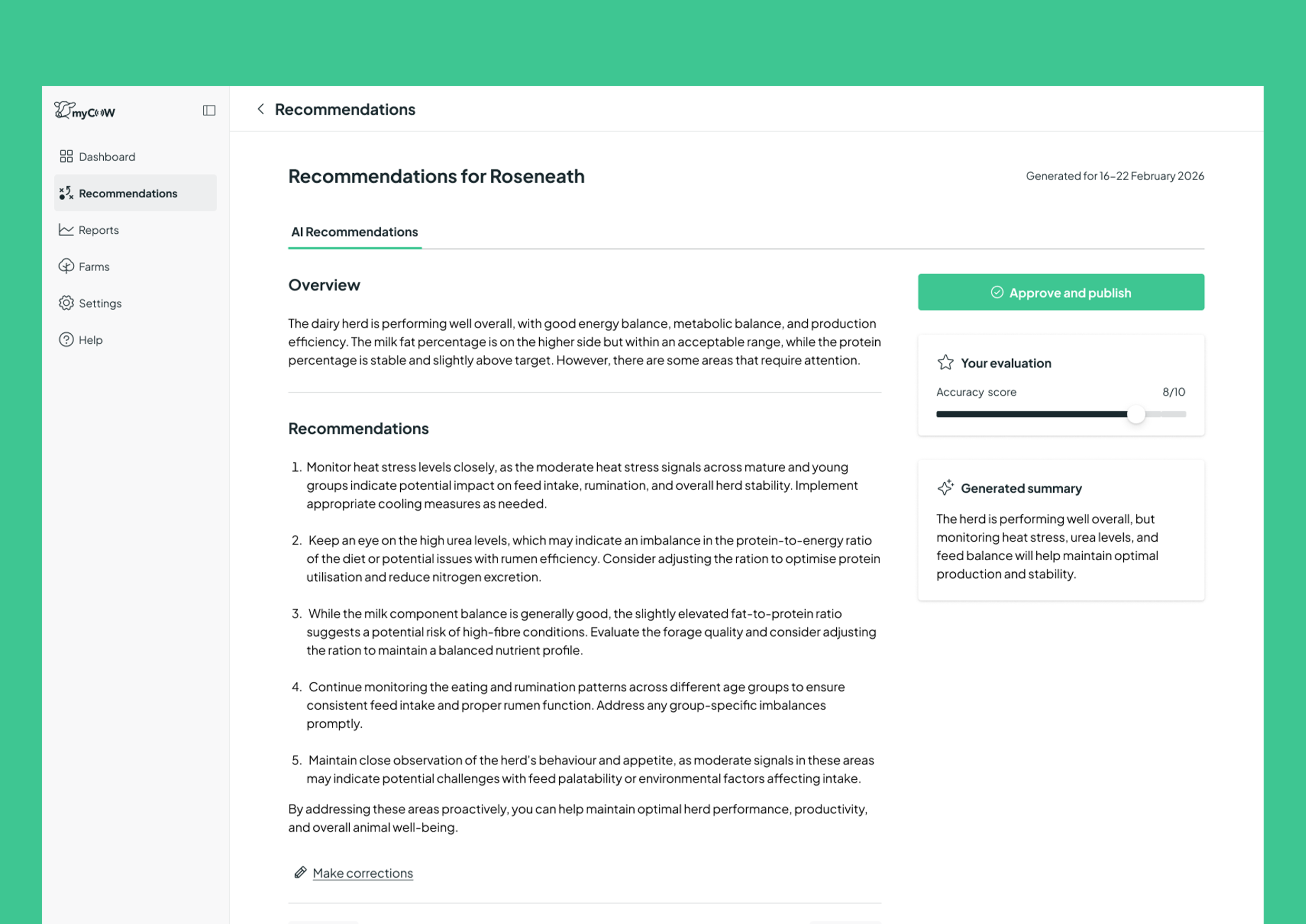
myCOW combines generative AI, time-series models and other specialised machine-learning models within one platform. These models analyse information including farm performance, milk production, herd data, sensor readings and cow-collar activity. By allowing different models to contribute to the same intelligence layer, the platform can build a more complete understanding of what is happening across the farm.
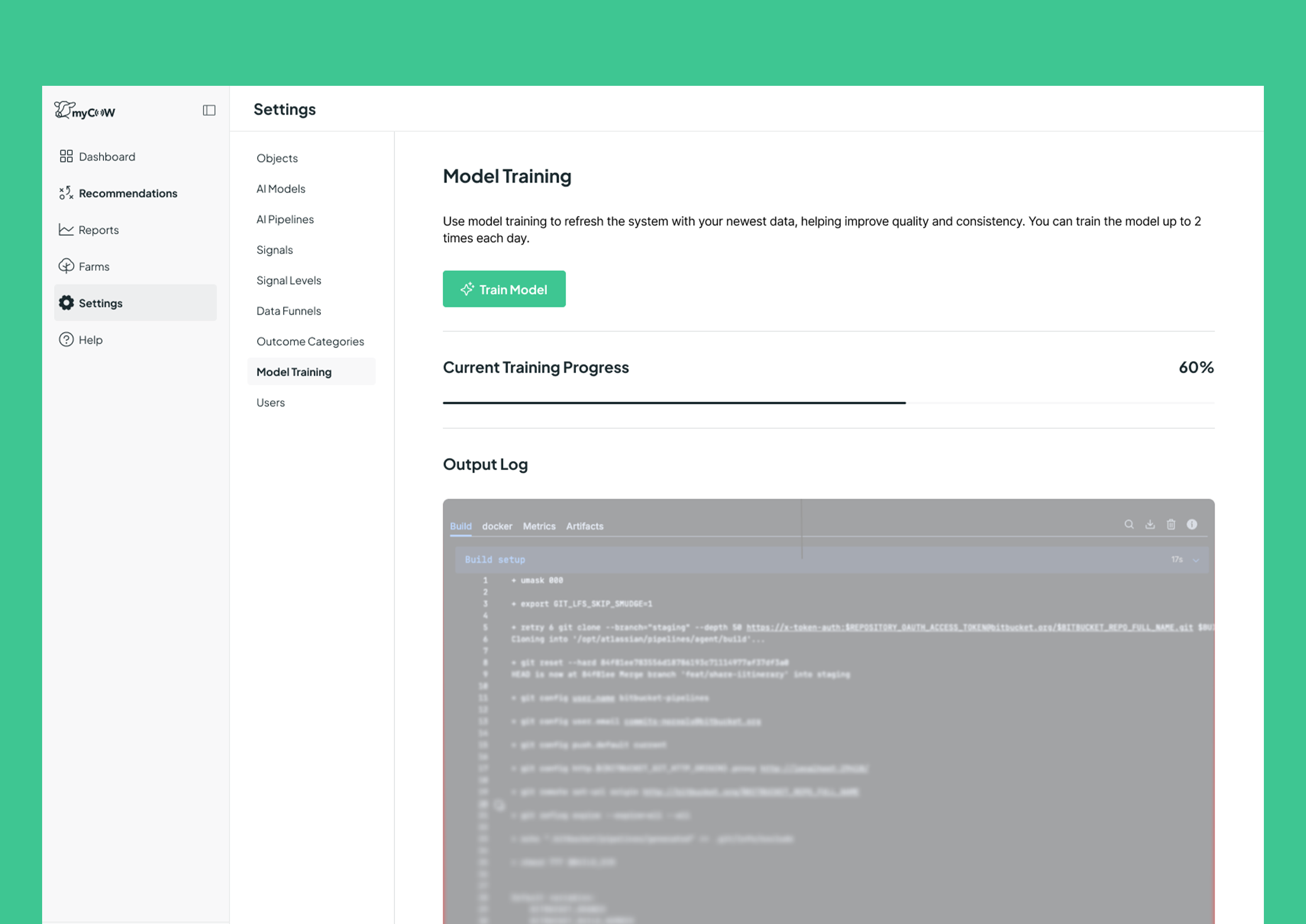
The models have continued to improve as more data, context and agricultural knowledge have been introduced. Over time, the system has become capable of completing more of the analysis independently, identifying important signals and producing increasingly relevant outputs. The architecture allows individual models to be trained and updated without disrupting the wider platform.
The platform was built using Python and FastAPI, providing the foundation for data processing, model orchestration and API delivery. Amazon SageMaker supports the training and deployment of machine-learning and time-series models, while Amazon Bedrock provides the generative AI capabilities used to interpret and communicate complex farm information.
The next stage is to introduce agentic capabilities into the platform. This will allow farm owners and managers to ask the AI questions about different scenarios, investigate changes in performance and explore relationships across farm, herd, milk and sensor data.
Rather than only presenting pre-generated insights, the platform will be able to understand the question being asked, identify the relevant information, coordinate the appropriate models and return a contextual answer. Over time, this will make myCOW a more interactive intelligence layer for the farm, allowing users to explore their data through natural conversation.